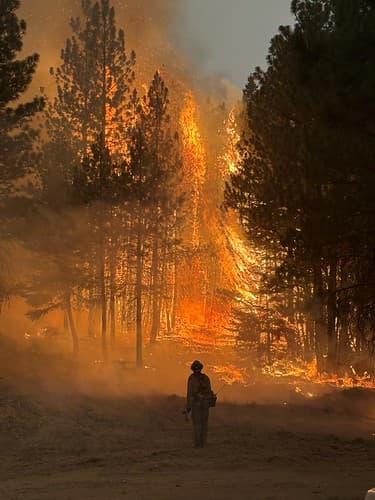
Proveneya & Nahiara · Updated Saturday, September 5, 2026

Wildfires 2026 — daily update. Pollinators are victims too — and they deserve to be counted. They are the great unknown of these fires, absent from the reporting.

View the daily update

Europe

  • Spain - 295,720 ha burned through September 2 (EFFIS/Copernicus), 45.6% of all EU burned area; third worst season in 30 years. Italy has 543 fires, Spain 433 and France 357.
  • Croatia - Omis: 900-1,000 ha burned, 1 dead, 36-40 injured and over 2,000 evacuated.
  • Germany and Greece - Serious fires in Hurtgenwald and Boeotia; 1,800 and over 1,000 evacuations respectively.
  • France - 98,000-116,000 ha burned, a 20-year satellite-record range. Portugal: Viseu burned about 13,000 ha.
  • Italy - 40,000 to over 100,000 ha depending on source; Sicily and Calabria are worst hit.
  • European Union - 647,375 ha burned through September 2; 2026 is the fourth worst year on record.

Africa

  • Algeria - 154 fires in 24 hours at peak; 6 deaths and about 150 homes affected in Annaba.

Asia

  • Turkey - About 95,000 ha burned, seven times the historical average.
  • Russia (Siberia) - About 600,000 ha burned in 2026.

North America

  • Canada - 3,848 fires and 2.92 million ha burned; Thunder Bay 36 has burned 314,000 ha and remains uncontained.
  • United States - Fire alert raised to maximum level.

South America

  • Ecuador - At least 300 ha burned in Cotacachi-Cayapas; over 4,000 ha burned nationally in early August.
  • Brazil - 1.76 million ha and 4,682 fire events in 2026.

Oceania

  • Australia - Over 400,000 ha burned in Victoria in January; the southern-summer season has passed.

Global context

Sources: MITECO, EFFIS/Copernicus, Global Wildfire Information System, national civil-protection agencies, CIFFC, Ecuador SNGR, Brazil Ministry of Environment, AFAC/NEMA, Greenpeace Spain, NOAA and Copernicus Marine Service.

Youth Citizens’ Assembly on PollinatorsRead the European Commission report in your language

Source record · white-winged-dove-migration

Feather isotope analysis reveals differential patterns of habitat and resource use in populations of white-winged doves

Journal of Wildlife Management / USGS

Method
Feather isotope analysis of migratory populations
Status
Cited route evidence; geometry review pending
Open the original source